
|
| You might also like: | Cicada Label Me! Printout | Cricket Printout | Harlequin Bug Printout | Label Grasshopper Anatomy Printout | Label Beetle Anatomy Printout | Today's featured page: Measurement |
| Our subscribers' grade-level estimate for this page: 3rd |
| Answers | Label the Cricket Anatomy Diagram |
Cricket Info/Printout Insect Printouts |
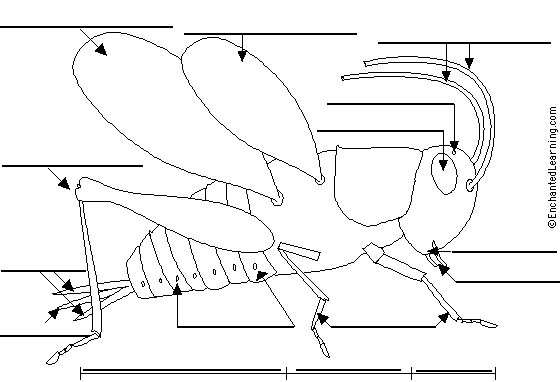
| abdomen - the segmented tail area of a cricket, which contains the heart, reproductive organs, and most of the digestive system antennae - like all insects, crickets have 2 segmented antennae that sense touch and odors cerci - a pair of sensory organs located at the rear of the abdomen (the singular of circi is cercus) - larger in males compound eye - crickets have 2 faceted eyes made up of many hexagonal lenses fore wing - the pair of wings closest to the head head - the head is at the front end of the cricket's body and is the location of the brain, the two compound eyes, the mouth parts, and the points of attachment of its two antennae. hind wing - the pair of wings farthest from the head |
jumping legs -the long, hindmost pair of the cricket's six legs mouth - located on the head near the palps ovipositor - a reproductive organ located at rear of the female's abdomen (between cerci) palps - long, segmented mouth parts (under the jaws) that grasp the food simple eye - small, primitive organs that distinguish dark from light spiracles - a series of holes located along both sides of the abdomen; they are used for breathing thorax - the middle area of the cricket's body - where the legs and wings are attached walking legs - the four, short front legs that are used for walking |
| Search the Enchanted Learning website for: |