
|
| You might also like: | Red-Tailed Hawk Printout | Great Blue Heron Printout | Canada Goose Printout | Brown Pelican Printout | Great Egret Printout | Today's featured page: Leafcutter Ants |
| All About Birds | EnchantedLearning.com Downy Woodpecker |
Animal Printouts Label Me! Printouts |
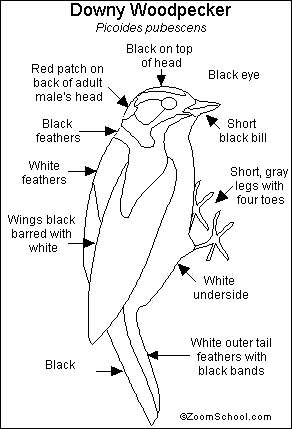 The Downy Woodpecker (Picoides pubescens) is a common, widespread woodpecker. It is found in woodlands, parks, and a variety of biomes throughout North America.
Anatomy: The Downy Woodpecker is a small, black and white bird with a short bill. The male has a red spot on the back of its head. It is about 6 to 6.5 inches (15-16.5 cm) long.
Diet: The Downy Woodpecker eats insects, seeds, grains, and suet.
Pecking: Woodpeckers peck for many reasons including eating, establishing territory, attracting mates, and nesting. In order to find and eat insects that live in tree bark (including ants and beetles), woodpeckers peck into the bark with their beak, making small holes. Woodpeckers also make drumming sounds on wood, but this is to establish territories and attract mates in the Spring. A third use of pecking is to make a nest within a dead tree.
Eggs and Nests: The Downy Woodpecker's nest is a hole in a tree that has been lined with wood chips. Females lay 3-6 white eggs in each clutch (a set of eggs laid at one time). The eggs hatch in just under 2 weeks.
| Search the Enchanted Learning website for: |