
|
| Mollusk Printouts | EnchantedLearning.com Slugs |
Animal Printouts Label Me! Printouts |
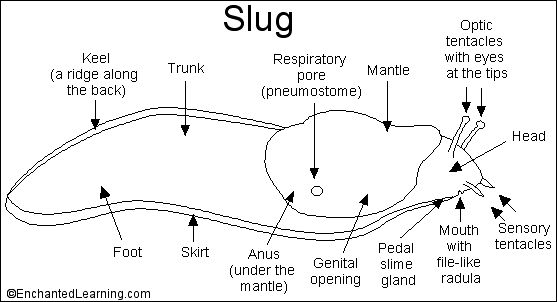
Locomotion: The slug creeps along on its large, muscular foot by contracting a series of muscles on the underside of the body (making a wave that goes from the back end to the front). A special gland in the foot secretes mucus (a slimy fluid) that helps the slug move. The slug leaves a trail of slime behind them when they move.
Tentacles and Senses: Slugs have two pairs of tentacles on the head - they have a light-sensitive eyespot located on the top of each of the larger tentacles. The smaller pair of tentacles is used for the sense of smell and the sense of touch.
Diet: Most slugs eat plants, fungus and decaying vegetable material (they are detrivores or herbivores), but some are predators (carnivores). Slugs eat using a radula, a rough tongue-like organ that has thousands of tiny tooth-like protrusions called denticles.
Respiration: Slugs breathe oxygen through a hole in the side of their head (a pneumostome, meaning "air hole"). Slugs also absorb oxygen directly through their moist skin.
Reproduction: Slugs are hermaphroditic - each slug contains both male and female reproductive organs. Slugs lay clutches of 20 to 100 tiny eggs on the surface of the soil; they can fertilize the eggs themselves.
Predators of the Slug: Many animals eat slugs, including birds, fish, frogs, snakes, turtles, mammals (like raccoons and shrews), and many insects (including beetles).
| Search the Enchanted Learning website for: |