
|
| Rodent Printouts | EnchantedLearning.com Groundhog/Woodchuck |
Animal Printouts Label Me! Printouts |
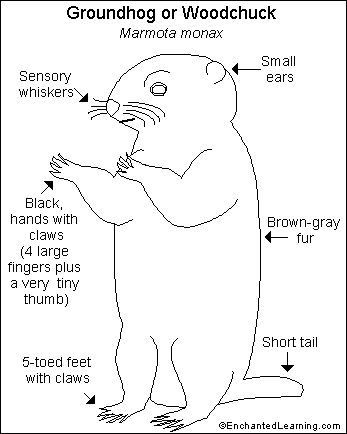 Groundhog is another name for Woodchuck. This rodent is a type of marmot. These solitary mammals hibernate (sleep through winter) in burrows. Groundhogs are found in North America in forests and fields.
Anatomy: A groundhog grows up to 17 inches (43 cm) long. It has a tail that is about 5 inches (13 cm) long. This mammal has a bulky body and short limbs. The fur is brown-gray and the eyes are black. The hands and feet are black and have sharp, sturdy claws. Like all rodents, their incisor teeth continue to grow throughout their entire life.
Diet: Groundhogs/woodchucks are mostly herbivores (plant-eaters). They eat grass, seeds, leaves, flowers, fruit, eggs, and some insects.
Predators: Groundhogs/woodchucks are hunted by many animals, including wolves, dogs, coyotes, bobcats, foxes, and humans. Groundhogs cannot move very quickly, so their best defense is to retreat into their burrows. Keen eyesight and hearing help warn groundhogs of predators approaching.
Classification: Class Mammalia (mammals), Order Rodentia (rodents), Family Sciuridae (ground squirrels), Genus Marmota (marmots), species M. monax.
| Search the Enchanted Learning website for: |