

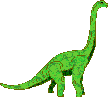


Learn all about the Brachiosaurus, a huge Sauropod dinosaur with a long neck, long forelimbs, and elevated nostrils.
Anatomy
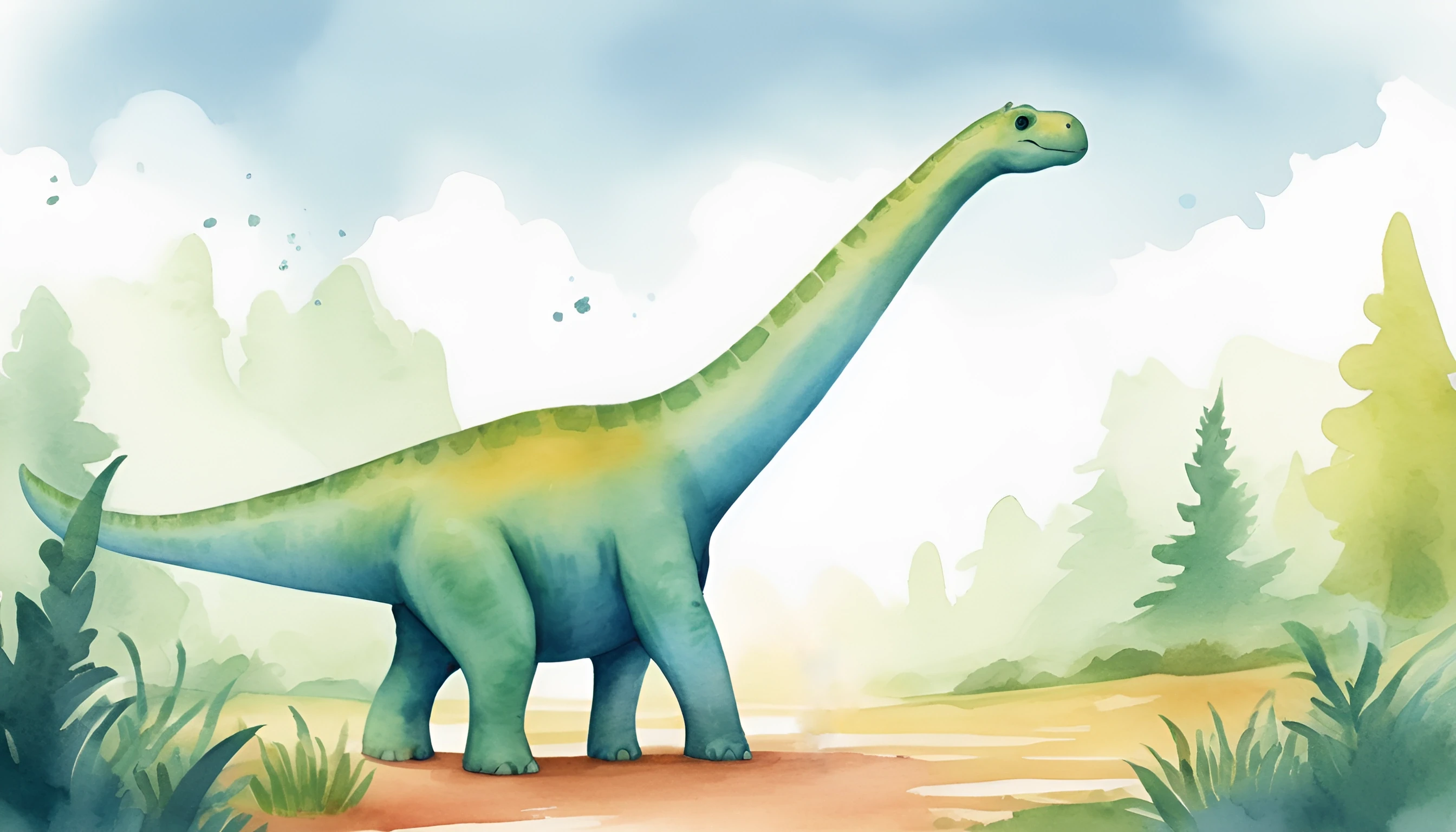
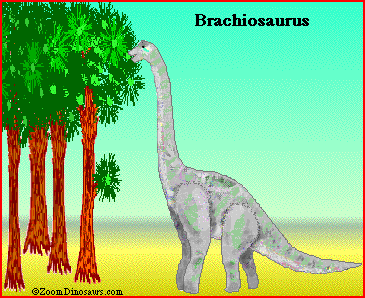 Brachiosaurus was one of the tallest and largest dinosaurs yet found. It had a long neck, small head, and relatively short, thick tail.
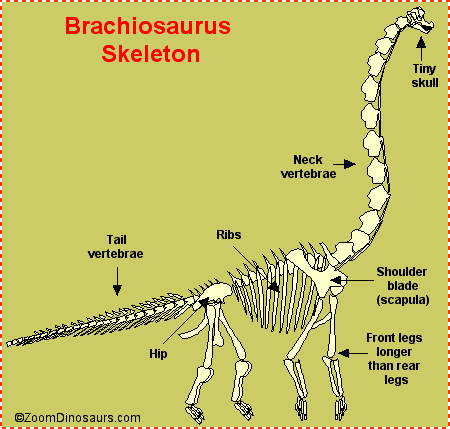
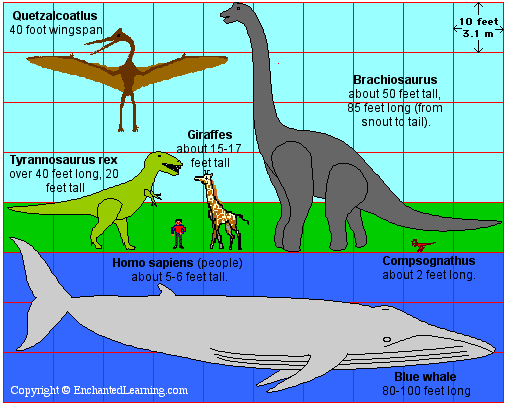
Brachiosaurus walked on four legs and, like the other Brachiosaurids and unlike most dinosaurs, its front legs were longer than its hind legs. These unusual front legs together with its very long neck gave Brachiosaurus a giraffe-like stance and great height, up to 40-50 feet (12-16 m) tall.
Brachiosaurus was about 85 feet (26 m) long, and weighed about 33-88 tons (30-80 tonnes). It had a claw on the first toe of each front foot and claws on the first three toes of each rear foot (each foot had five toes with fleshy pads).
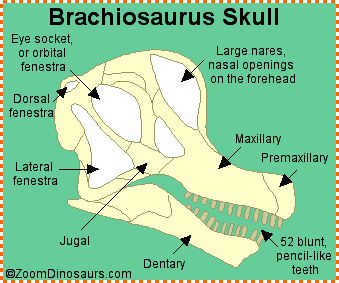 Like other Brachiosaurids, it had chisel-like teeth, its nostrils were on the top of its head, and it had large nasal openings indicating that it may have had a good sense of smell. Brachiosaurus had 26 teeth on its top jaw and 26 on the bottom for a total of 52 teeth towards the front of the mouth.

Diet
 Brachiosaurus was an herbivore, a plant eater. It probably ate the tops of tall trees with its large spatulate (chisel-shaped) teeth. It swallowed its food whole, without chewing it, digesting the plant material in its gut.
When Brachiosaurus Lived
 Brachiosaurus lived in the middle to late Jurassic period, about 156-145 million years ago, near the middle of the Mesozoic Era, the Age of Reptiles. Some dating estimates have Brachiosaurus surviving until 140 million years ago, during the dawn of the Cretaceous period.
Among the contemporaries of Brachiosaurus were other giant Sauropods including Camarasaurus, Supersaurus, Ultrasauros, and Haplocanthosaurus.
Habitat
Brachiosaurus was a terrestrial animal. It was assumed for many years that giant sauropods spent most of their time in water, letting the water support their weighty bodies while breathing through their lofty nostrils. Now it is believed that they were fully terrestrial, just as Elmer S. Riggs, who first described Brachiosaurus, argued in a 1904 article. He believed, as most modern scientists do, that Brachiosaurus’ feet and limbs were not broad enough to support the heavy animal in mud, that its back was flexible enough to support it on land, and that its chest was narrow and deep, which is insufficient for breathing underwater, and inconsistent with modern-day water-dwelling large animals (like hippos).
Possible Predators
A healthy, adult Brachiosaurus probably had no predators. The largest-known meat-eaters from that time (the late Jurassic period) and place (North America and Africa) were Allosaurus, Ceratosaurus, and Torvosaurus. These theropods were less than half the size of Brachiosaurus, and probably had much easier prey to hunt (like smaller sauropods and ornithischians like stegosaurs).
Blood Pressure Problems
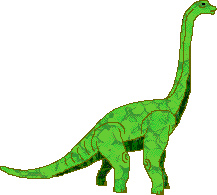 Brachiosaurus and some of the other large sauropods (the huge long-necked plant-eaters) needed to have large, powerful hearts and very high blood pressure in order to pump blood up the long neck to the head and brain. The heads (and brains) of Brachiosaurus was held high (many meters) above its heart. This presents a problem in blood-flow engineering. In order to pump enough oxygenated blood to the head to operate Brachiosaurus’ brain (even its tiny sauropod brain) would require a large, powerful heart, tremendously high blood pressure, and wide, muscular blood vessels with many valves (to prevent the back-flow of blood). Brachiosaurus’ blood pressure was probably over 400 mm Mercury, three or four times as high as ours.
Behavior
- Herds: Brachiosaurus probably travelled in herds and may have migrated when they depleted their local food supply.
- Eggs: Brachiosaurus may have hatched from eggs, like other sauropods. Sauropod eggs have been found in a linear pattern and not in nests; presumably the eggs were laid as the animal was walking. It is thought that sauropods did not take care of their eggs.
- Life Span: Sauropod life spans may have been in the order of 100 years.
- Defense: Brachiosaurus’ best defense was size. In addition, its long tail could whip away most attackers. Also, they had leathery skin, although this wasn’t much of a defense against long, sharp theropod teeth. They also had clawed feet that were more pronounced in the young.
Intelligence
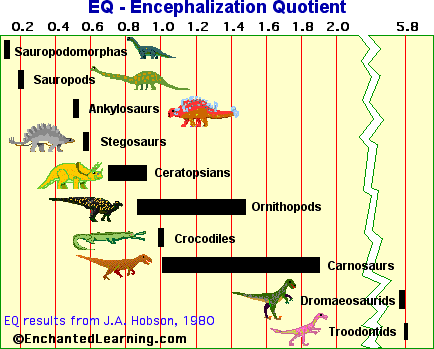
It used to be thought that the sauropods (like Brachiosaurus and Apatosaurus) and Stegosaurus had a second brain. Paleontologists now think that what they thought was a second brain was just an enlargement in the spinal cord in the hip area. This enlargement was larger than the animal’s tiny brain.
Brachiosaurus was a sauropod, whose intelligence (as measured by its relative brain to body weight, or EQ) was the among the lowest of the dinosaurs.
Locomotion
Brachiosaurus was quadrupedal, walking on four legs. Unlike most other dinosaurs, the front legs were longer than the hind legs.
Discovery of Fossils
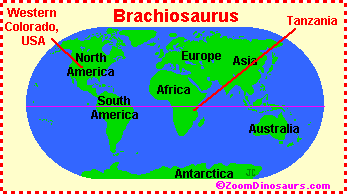 Brachiosaurus was first found in the Grand River Valley, in western Colorado, USA, in 1900. This incomplete skeleton was described by paleontologist Elmer S. Riggs, who named Brachiosaurus in 1903. In 1909, Werner Janensch found many Brachiosaurus fossils in Tanzania, Africa. Many Brachiosaurus fossils have been found, in North America and Africa.
Classification
Brachiosaurus belonged to the:
- Kingdom Animalia (animals)
- Phylum Chordata (having a hollow nerve chord ending in a brain)
- Class Archosauria (diapsids with socket-set teeth, etc.)
- Order Saurischia - lizard-hipped dinosaurs, the ancestors of birds
- Sauropodomorph - long-necked, long-tailed plant-eaters who walked on four legs
- Suborder Sauropoda - very large herbivores
- Neosauropoda - advanced sauropods
- Family Brachiosaurid - nasal crests on the top of the head and for most, the front legs were longer than their rear legs, giving them a giraffe-like stance
- Subfamily Brachiosaurinae - the largest land animals which included Brachiosaurus, Ultrasauros, Seismosaurus, and others
- Genus Brachiosaurus
- Species - the type species is B. altithorax (Riggs, 1903). Other species include: B. atalaiensis (de Lapparent & Zbyszewski, 1957), B. brancai (Janensch, 1914)
Brachiosaurus Activities & Links
- Brachiosaurus Printout
- Brachiosaurus Skeleton Printout
- Print out a K-3 level Brachiosaurus information page to color!
 Make a paper Brachiosaurus finger puppet.
- 10 questions about Brachiosaurus
- A first-grade level Brachiosaurus addition activity printout.
- A Brachiosaurus math/coloring activity - For second graders. Do 1-digit addition problems to color a Brachiosaurus scene.
- A quiz about Brachiosaurus - Unscramble the answers and see how much you know about this tall dinosaur! For grades 2-3.
- A Brachiosaurus Activity printout for beginning readers (advanced first graders to second graders). Students read and follow the directions to complete a Brachiosaurus scene.
- An online quiz about Brachiosaurus - answer the questions and you will unscramble the picture of Brachiosaurus! For grades 2-4.
- Brachiosaurus Fact Sheet or a printable version
- Brachiosaurus Questions and Answers
Information Sheets About Dinosaurs (And Other Prehistoric Creatures)
Just click on an animal’s name to go to that information sheet. If the dinosaur you’re interested in isn’t here, check the Dinosaur Dictionary or the list of Dinosaur Genera.
How to write a great dinosaur report.
Names with an asterisk (*) were not dinosaurs.